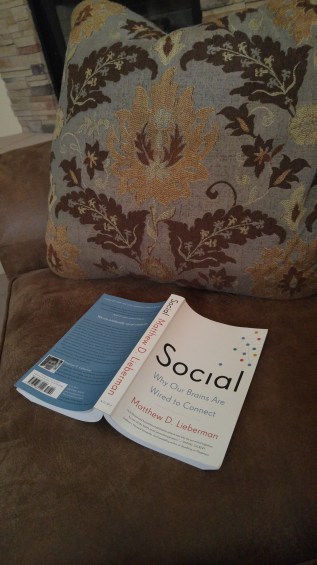
 Social: Why Our Brains Are Wired to Connect, by Matthew D. Lieberman
We crave connection.
We are not meant to live alone.
In the modern, western world we seem to have graduated from our eastern roots. Today we live in a boxed society. We have box homes with box cars to take us to our office box where we eat our boxed lunch and talk to friends, family, coworkers, and loved ones over our boxed phone. As compared to our tribal living in the past we now seem more isolated than ever. Marriage is at an all-time low. Most of us barely know our neighbors. And it is now common that our closest friends live miles away from us and that we see them less often than we should, the western urban sprawl makes this even more exaggerated. So what are the consequences of this on society?
Over the last century GDP and standard of living have skyrocketed across most of the world. Each person is now typically better off than his or her grandparents and even parents. To put it simply, we have more money.
All too often though, we equate money with happiness. While this may have some truth it is only limited. A study was recently done indicating that happiness begins to diminish after an annual income of $70,000. Sure, being able to buy nice things can make life more enjoyable than otherwise, but this pales in comparison to what our social life does for our happiness.
It turns out, another study found that “having a friend whom you see on most days, compared to not having such a friend, had the same impact on well-being as making an extra $100,000 a year. Being married is also worth an extra $100,000, while being divorced is on par with having your salary slashed by $90,000. Just seeing your neighbor regularly is like making an extra $60,000.”
Now that we see just how important being social is to our happiness, how does social interaction influence us? It is common to hear that you are the average of your 5 closest influences. In other words your “self” or identity is made up of the sum or your experiences. If you don’t believe me yet, just look at children that were raised in isolation; they have an almost impossible time conforming to the norms of society. In fact they almost entirely lack a sense of self. This is what the self does. It pushes us to conform to our group. We are so often taught that conforming is a sign of weakness, but it is what we are wired to do. Looking back to our early roots, we had to get along in small groups in order for the group to survive. Do you ever have the internal conflict of being different vs conforming to a group? That is your “ego” battling your “self”.
You might now ask, “If we are defined as the sum of our experiences, what control do we have over who we are?” This question leads us to see that if we are to change who we are as an individual we must decide to seek out experiences that will shape us in the way we want. We must surround ourselves with people and experiences that will guide us to our goals eventually aligning the “ego” with the “self” and harmonizing our inner mind and with the social world we live in.
Being social is a critical part of being human and Social has a lot more to offer than just the above nuggets. This is well worth the read, especially the final two sections on harmonizing and making society as a whole smarter, happier and more productive.
 Books for Success